Thermal Imaging Scope: Your Complete Guide to Choosing the Right Device in 2026
A practical, no-nonsense guide to thermal imaging scope technology — covering FLIR thermal imaging cameras, handheld units, and how to pick the right thermal camera for your needs without blowing the budget.
What Is a Thermal Imaging Scope?
A thermal imaging scope detects infrared radiation emitted by objects and converts it into a visible image. Simple as that. Every object above absolute zero (-273.15°C) gives off heat energy, and these devices let you see that energy as a colour map — hot spots show up bright, cold areas stay dark.
I've been using thermal cameras for about four years now, mostly for checking insulation in older Bristol properties. Honestly, the first time I pointed one at a Victorian terrace wall and saw all the heat just pouring out through the brickwork? Proper eye-opening, that was.
The technology sits at the intersection of optics and electronics. A thermal image camera uses a microbolometer sensor (typically vanadium oxide or amorphous silicon) to detect wavelengths between 8–14 μm. That's the long-wave infrared band, well beyond what our eyes can pick up. The sensor resolution matters hugely — you'll find anything from 80×60 pixels on budget units up to 640×480 on professional-grade kit.
How Thermal Cameras Actually Work
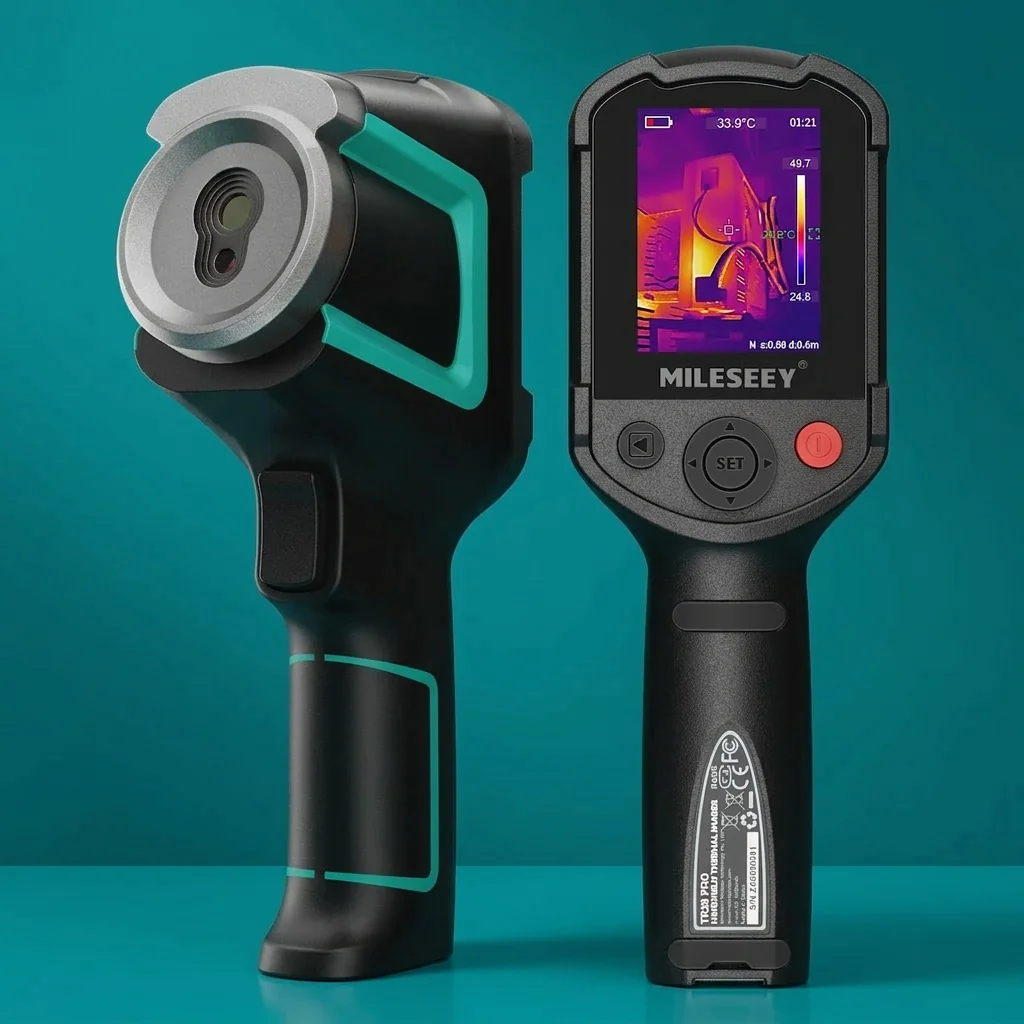
The sensor captures infrared radiation, not reflected light. That's the fundamental difference between a thermal infrared camera and a standard digital camera.
The Detection Process
Infrared energy hits the detector array. Each pixel on the microbolometer heats up proportionally to the incoming radiation. The resistance change gets measured, digitised, and mapped to a colour palette. All of this happens 25–60 times per second on decent units.
So what does that mean in practice? You're seeing surface temperatures, not internal ones. A common mistake I see people make — they think a thermal camera can see through walls. It can't. What it shows you is the surface temperature pattern that hints at what's happening behind the surface. Big difference.
Accuracy and Calibration
Most handheld thermal cameras offer accuracy of ±2°C or ±2% of reading, whichever is greater. Professional units from brands like FLIR can achieve ±1°C. The British Standards Institution (BSI) references ISO 18434-1 for condition monitoring using infrared thermography — worth checking if you're doing anything that needs to stand up to scrutiny.
Emissivity settings matter too. Different materials emit infrared radiation at different rates. Shiny metal? Low emissivity (around 0.1–0.3). Matt paint? High emissivity (0.9+). Get this wrong and your readings will be miles off.
Types of Thermal Camera Available in 2026
The market's shifted quite a bit this spring. Budget options have got genuinely usable, while professional units keep pushing resolution boundaries.
Handheld Thermal Imaging Cameras
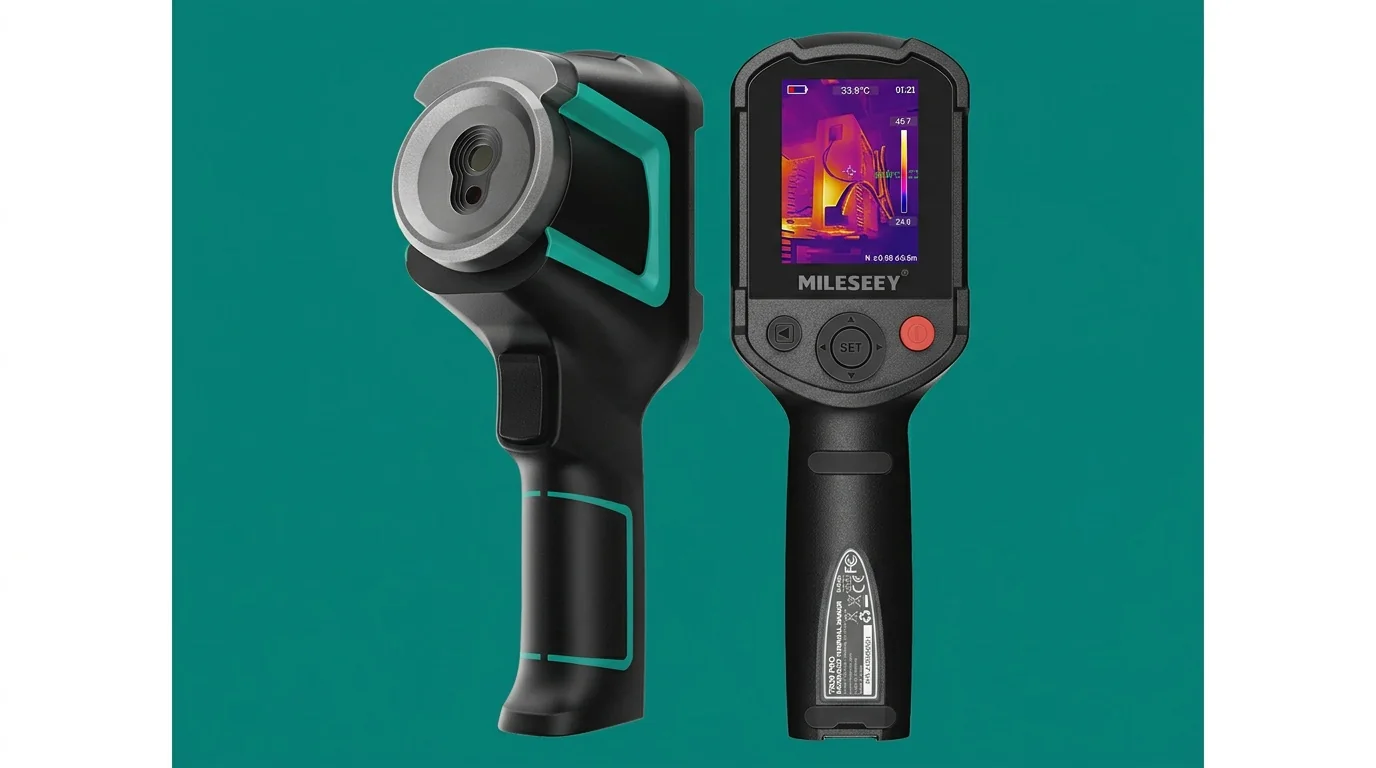
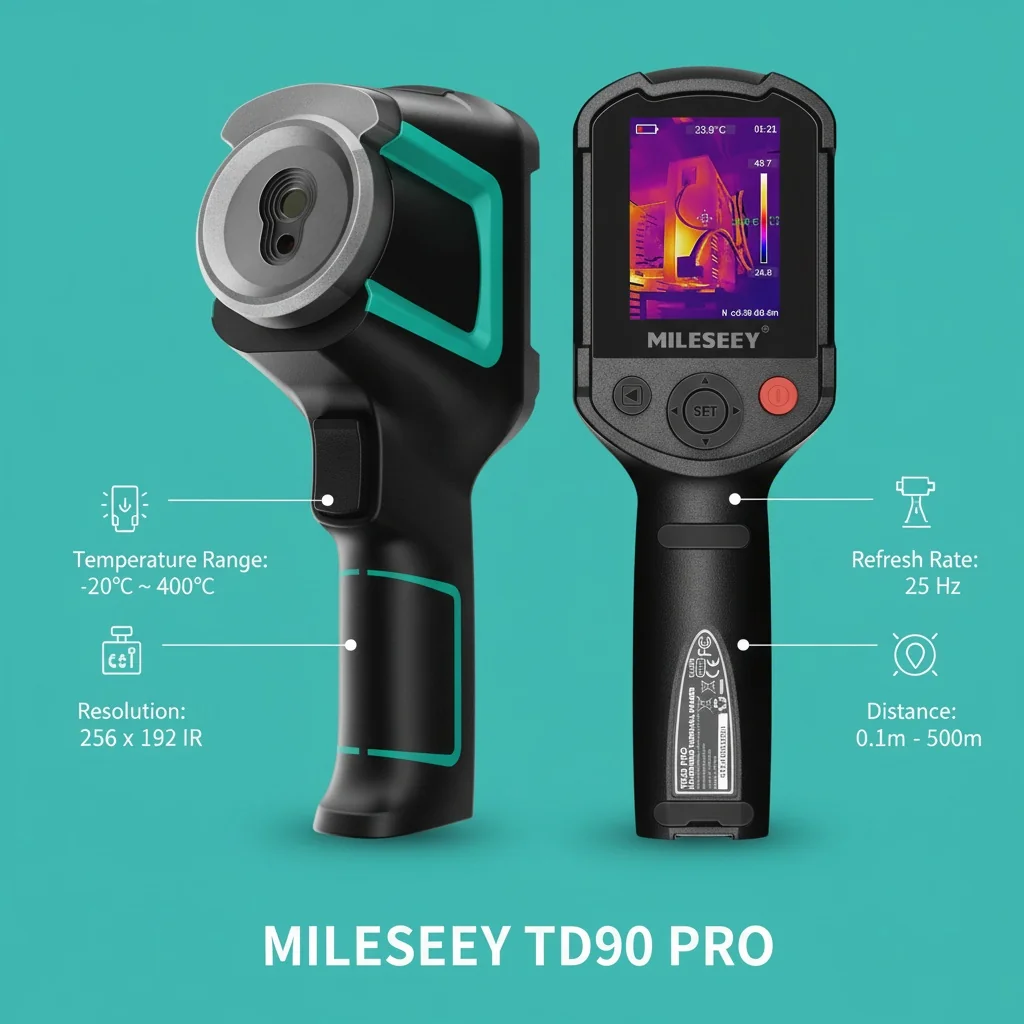
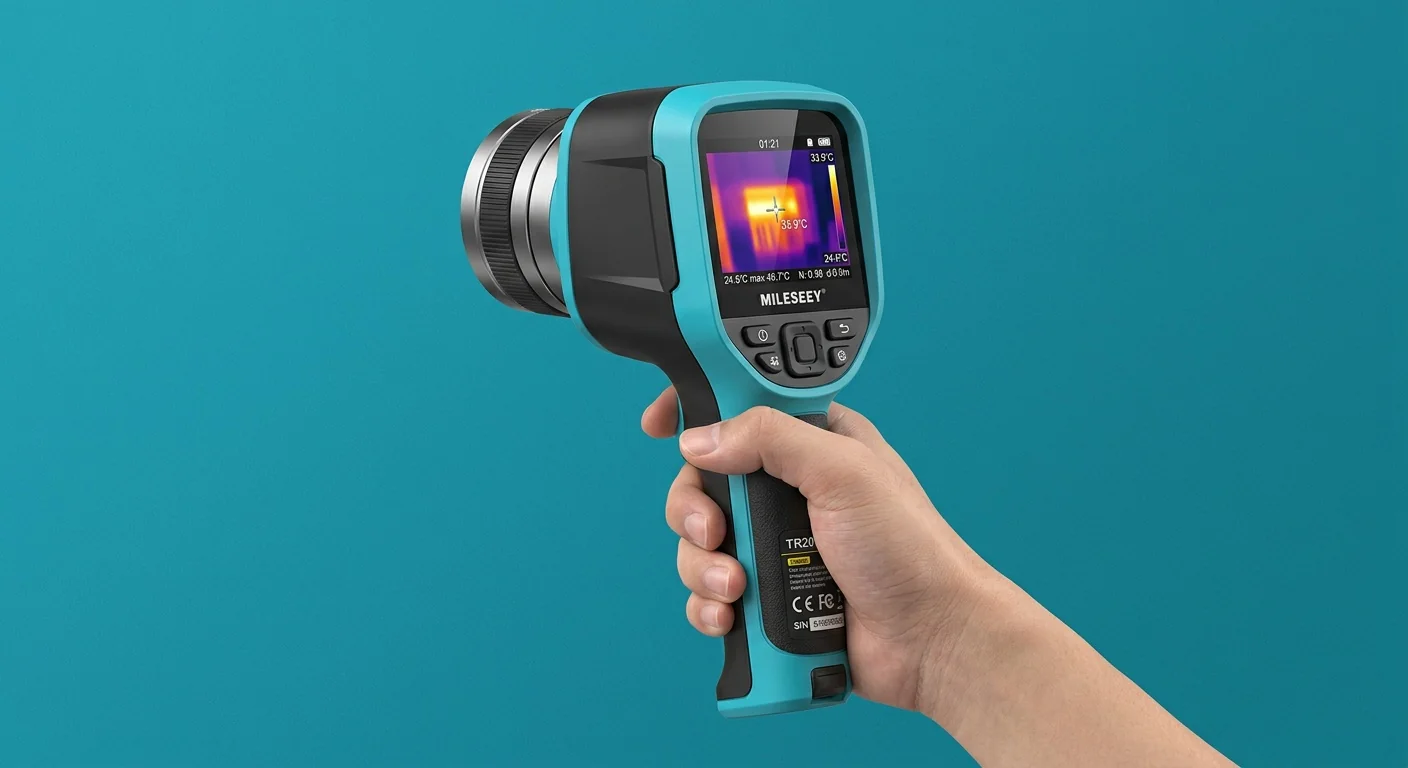
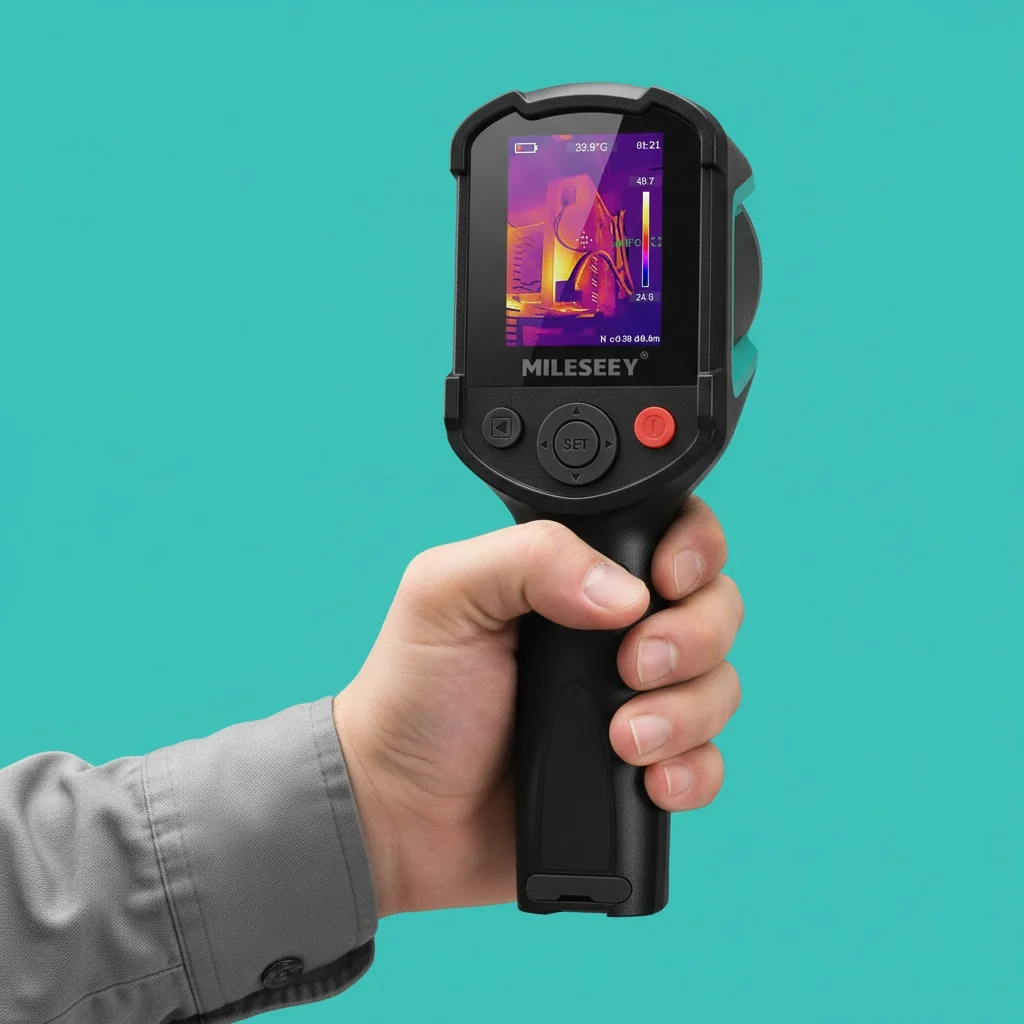
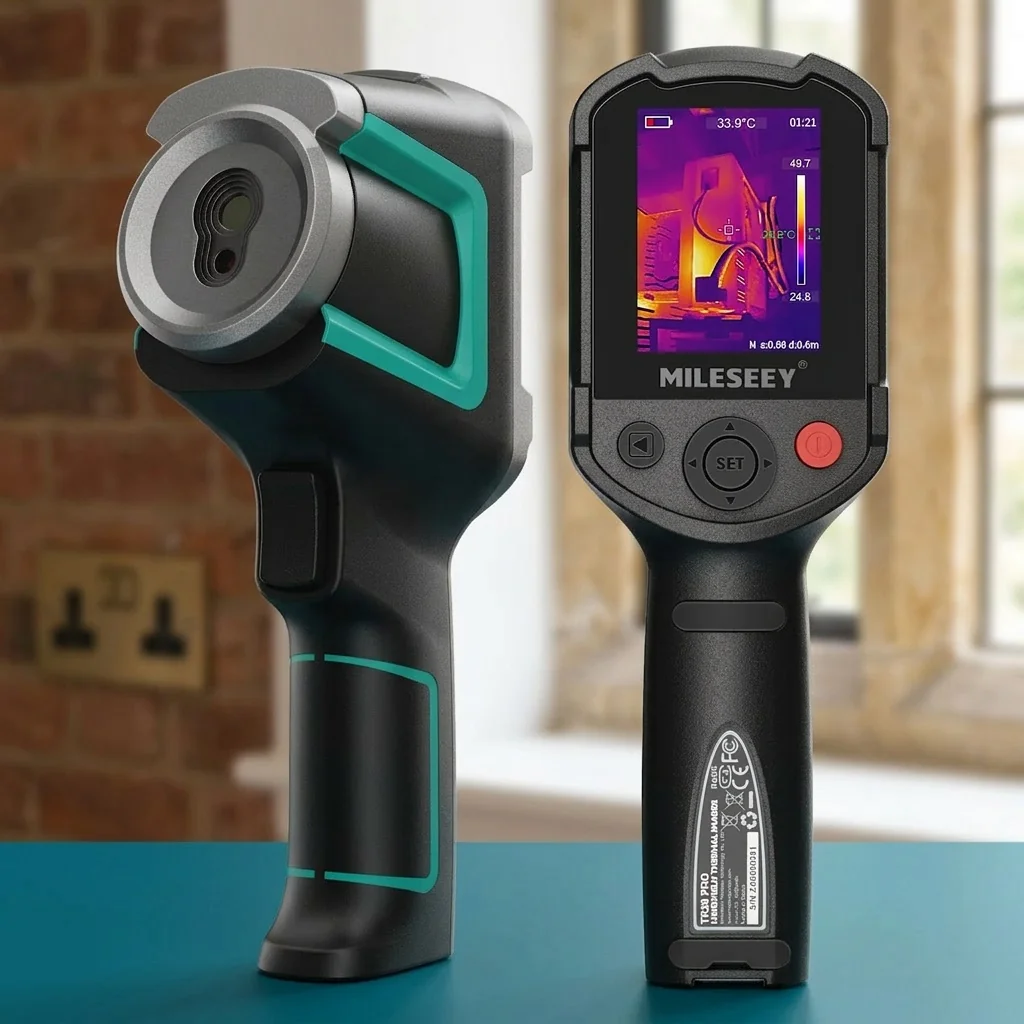
These are your standalone units with built-in displays. The MILESEEY Thermal Camera Handheld at £507.47 represents the entry-level end — pocket-sized, straightforward to use, and decent for basic heat detection tasks. Professional handheld units from FLIR and Testo run anywhere from £300 to £5,000+.
Thermal Camera Apps and Smartphone Attachments
A thermal camera app alone can't detect infrared — your phone sensor simply doesn't capture those wavelengths. You need a plug-in module. FLIR ONE and Seek Thermal make popular Android and iOS attachments ranging from £200–£450. The thermal infrared camera for Android options have improved massively since 2024, with some now offering 256×192 resolution.
Fixed-Mount and Drone-Mounted Systems
For building surveys, search and rescue, or agricultural monitoring, drone-mounted thermal cameras start around £2,000 for the camera module alone. Fixed systems for industrial process monitoring can run into tens of thousands.
| Type | Resolution Range | Price Range (GBP) | Best For | Typical Accuracy |
|---|---|---|---|---|
| Budget Handheld | 80×60 to 160×120 | £28–£300 | DIY, basic inspections | ±2–3°C |
| Smartphone Attachment | 160×120 to 256×192 | £200–£450 | On-site quick checks | ±2°C |
| Professional Handheld | 320×240 to 640×480 | £1,000–£5,000 | Building surveys, electrical | ±1–2°C |
| FLIR Thermal Imaging Camera (Pro) | 640×480+ | £3,000–£15,000 | R&D, industrial, scientific | ±1°C |
| Drone-Mounted | 320×256 to 640×512 | £2,000–£10,000+ | Aerial surveys, agriculture | ±2°C |
FLIR Thermal Imaging Cameras vs Budget Alternatives
FLIR dominates the professional thermal camera market. They've earned that position through decades of development and genuinely excellent image processing. But are they always the right choice? Not necessarily., a favourite among Britain’s tradespeople
Where FLIR Excels
The MSX image enhancement technology on FLIR cameras overlays visible-light detail onto thermal images. It's brilliant for identifying exactly which component is overheating in a packed electrical panel. Their software ecosystem (FLIR Tools, FLIR Ignite) makes report generation straightforward. For professional thermographers who need to produce client-facing reports, that matters.
A FLIR thermal camera like the E8 Pro offers 320×240 resolution, a 42° field of view, and temperature range of -20°C to 550°C. That's proper professional kit. Costs around £3,500 though.
Where Budget Options Make Sense
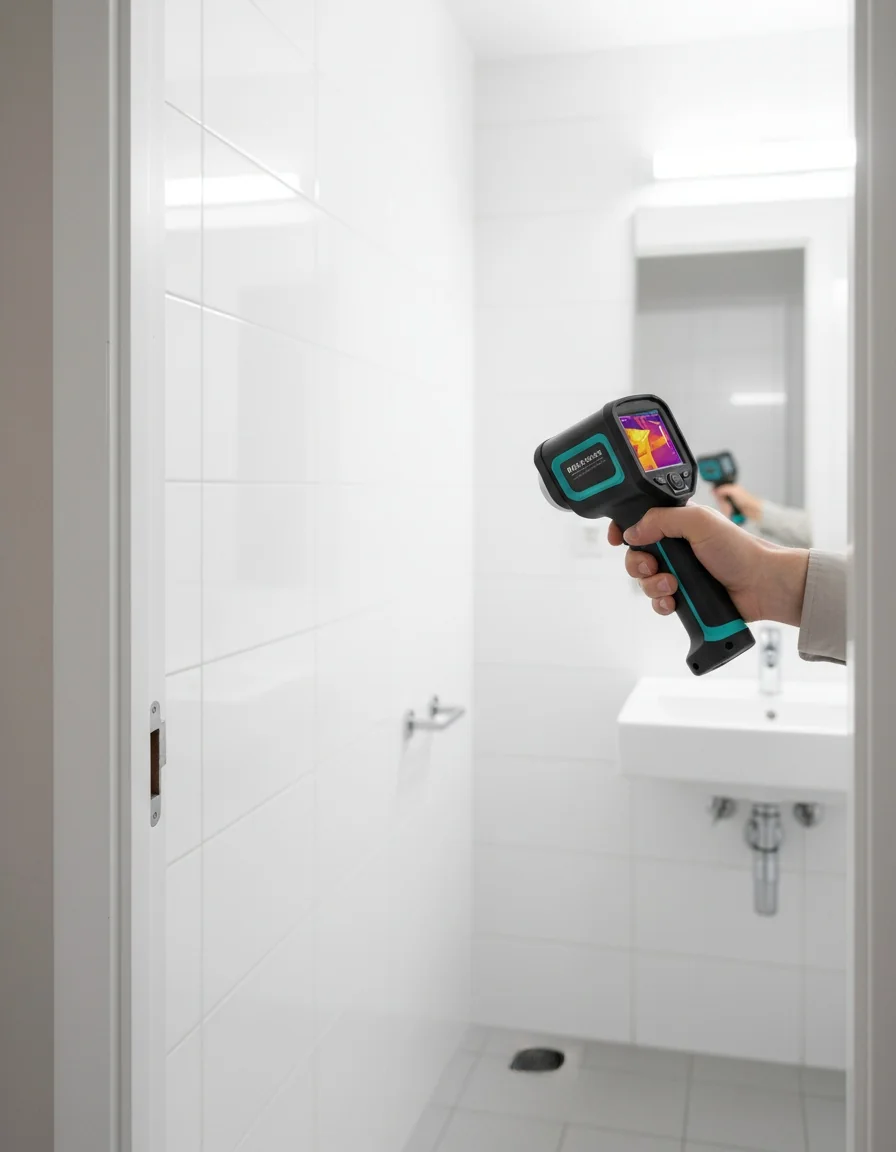
Look, I know the price seems steep for professional FLIR gear, but hear me out on when cheaper works fine. If you're checking your loft insulation, finding a water leak, or seeing where draughts come in around window frames — a budget thermal camera at £28–£200 does the job. You don't need 640×480 resolution to spot a massive cold bridge in your extension wall.
My mate who's a plumber swears by his cheap thermal unit for finding underfloor heating pipe runs. Cost him less than fifty quid. Does it produce publication-quality thermograms? No. Does it show him where the pipes are? Absolutely.
Choosing the Right Thermal Imaging Scope for Your Needs
The right device depends entirely on what you're trying to achieve. Here's how to narrow it down without overthinking it.
Resolution Requirements
For general building diagnostics, 160×120 pixels is the minimum I'd recommend. Below that, you're essentially looking at blobs rather than useful detail. For electrical inspections where you need to identify individual components, 320×240 is the sweet spot. Research and development work typically demands 640×480.
Temperature Range
Standard thermal cameras cover -20°C to 150°C. That handles most building and HVAC work. Electrical fault-finding needs up to 400°C minimum. Industrial process monitoring might require specialist units rated to 1,500°C or higher.
Field of View and Focus
Wider field of view (45°+) suits building surveys where you're scanning large areas. Narrower lenses (12–15°) work better for inspecting distant objects like overhead power lines or high-level pipework. Some units offer interchangeable lenses — gert useful if you do varied work.
Connectivity and Reporting
Wi-Fi, Bluetooth, and USB-C connectivity matter if you're producing reports. Thermal photography camera features like radiometric image storage (where every pixel contains temperature data) let you analyse images after the fact. Non-radiometric units just save a pretty picture — useless for proper analysis. (That's a trap a lot of first-time buyers fall into, so it's worth double-checking before you commit.)
Thermal Camera Hire vs Buying Outright
Thermal imaging camera hire makes sense for one-off projects. Buying makes sense if you'll use it regularly. The maths isn't complicated.
Hire Costs in 2026
Hiring a thermal imaging camera in the UK typically costs £80–£250 per day for professional-grade units, or £300–£600 per week. That's for kit worth £3,000–£8,000 to buy outright. If you need a thermal camera hire for a single building survey, the daily rate is obviously sensible.
That said, there's a hidden cost with hire. You often need to collect and return the unit, plus you're working to someone else's timeline. If you find something interesting on day three of a two-day hire, tough luck.
When Buying Wins
If you'll use a thermal camera more than 15–20 times per year, buying pays for itself quickly. The Mileseey range offers entry points from £507.47, making ownership accessible even for occasional use. For tradespeople who could use thermal imaging on every job — electricians, plumbers, building surveyors — it's a no-brainer to own one., popular across England
The Health and Safety Executive (HSE) increasingly references thermal imaging in guidance for electrical safety inspections and building condition assessments. Having your own unit means you can check things proactively rather than waiting until there's a problem.
Practical Applications Across Industries
Thermal imaging cameras aren't just for finding heat leaks in houses. The applications are genuinely broad.
Building and Construction
Insulation defects, moisture ingress, air leakage paths, underfloor heating mapping, flat roof leak detection. A single thermal survey can identify issues that would take weeks to find by other methods. I've personally found damp problems in three different properties that visual inspection completely missed.
Electrical and Mechanical
Overloaded circuits show up as hot connections. Failing bearings generate friction heat before they seize. Loose electrical connections create resistance heating — a 10°C rise above ambient on a busbar connection is a warning sign, 35°C+ is critical. The Which? consumer guides recommend regular thermal checks for commercial electrical installations.
Energy Efficiency and Sustainability
With energy costs still improved in 2026, thermal cameras pay for themselves through the savings they identify. A typical UK semi-detached house loses 25–35% of heat through walls and 25% through the roof. A thermal imaging scope reveals exactly where remedial work will have the most impact — no guesswork needed.
Wildlife and Outdoor Use
Thermal scopes for wildlife observation detect animals in complete darkness at ranges of 200–1,000+ metres depending on the unit. Farmers use them for livestock monitoring. Ecologists survey bat roosts and nesting sites. Any thermal scope used for hunting in the UK must comply with relevant firearms legislation — check GOV.UK guidance on night vision and thermal equipment regulations.
Frequently Asked Questions
What's the difference between a thermal imaging scope and a standard thermal camera?
A thermal imaging scope typically refers to a monocular or weapon-mounted device optimised for distance viewing, with magnification of 2×–8×. A standard thermal camera is designed for close-to-mid-range inspection work with wider fields of view (40°–55°). Both use identical microbolometer sensor technology but differ in optics and form factor.
Can a thermal camera app on my phone detect heat without an attachment?
No. A thermal camera app alone cannot detect infrared radiation — smartphone sensors only capture visible light (400–700nm wavelength). You need a hardware attachment like FLIR ONE (£250–£400) or Seek Thermal Compact (£200–£300) that plugs into your phone's USB-C or Lightning port to provide actual thermal detection capability.
How much does thermal imaging camera hire cost in the UK?
Thermal camera hire in the UK ranges from £80–£250 per day or £300–£600 per week for professional units (320×240 resolution or higher). Budget options with lower resolution start around £50 per day. Most hire companies require a deposit of £200–£500 and proof of identity. Weekly rates offer better value for surveys taking multiple days.
What resolution do I need for building thermal surveys?
For professional building surveys that meet industry standards, 320×240 pixels is the recommended minimum resolution. This provides 76,800 measurement points per image — enough to identify insulation gaps, thermal bridges, and moisture patterns with confidence. DIY checks can work with 160×120, but anything below 80×60 pixels produces unreliable results.
Are FLIR thermal cameras worth the premium price?
For professional thermographers producing client reports, yes — FLIR's MSX enhancement, radiometric data storage, and reporting software justify the £2,000–£8,000 price range. For tradespeople doing quick diagnostic checks or homeowners investigating energy loss, budget thermal cameras from £28–£300 provide adequate detection capability at a fraction of the cost.
Can thermal cameras see through walls?
No. Thermal cameras detect surface temperatures only — they cannot see through solid materials. However, temperature differences on a wall's surface reveal what's happening behind it. A cold patch indicates missing insulation, a warm line shows a hidden hot water pipe, and damp areas appear cooler due to evaporative cooling. It's indirect detection, not X-ray vision.
Key Takeaways
- Resolution matters most: 160×120 minimum for useful results; 320×240 for professional building surveys; 640×480 for research and detailed electrical work.
- Budget options work: Entry-level thermal cameras from £507.47 handle basic heat detection tasks perfectly well — you don't always need a £5,000 FLIR unit.
- Hire vs buy calculation: If you'll use a thermal imaging scope more than 15–20 times annually, buying outright saves money within the first year.
- Phone attachments aren't toys: Modern thermal infrared camera modules for Android and iOS now offer 256×192 resolution — genuinely useful for on-site diagnostics.
- Emissivity settings are critical: Incorrect emissivity values can introduce errors of 10°C or more on reflective surfaces. Always adjust for the material you're measuring.
- Surface temperature only: Thermal cameras show surface patterns that indicate subsurface issues — they don't see through materials directly.
- UK regulations apply: Thermal scopes used for outdoor observation or hunting must comply with current firearms and wildlife legislation as of 2026.
Ready to try MILESEEY?
Shop Now — £507.47